There is no single best time to visit Kashmir, and anyone who gives you one month without asking what you want is guessing. The valley runs four genuinely distinct seasons within a two-hour drive, and the month you choose decides whether you get tulips or powder, empty meadows or a queue at the gondola. Here is the honest version, month by month, from people who drive these roads all year.
The short answer
If you want the classic Kashmir of the photographs — green meadows, comfortable days, everything open — come in May, June or September. If you want snow, come in January or February. If you want the Tulip Garden, you have a three-week window in late March and April and no flexibility at all. If you want the valley to yourself and do not mind the cold, come in November.
| Month | What you get | Crowds | Worth it for |
|---|---|---|---|
| March | Late snow, early blossom | Low | Blossom, quiet |
| April | Tulips, blossom, snow on peaks | High | The Tulip Garden |
| May | Green meadows, mild days | High | First-timers |
| June | Peak green, everything open | Very high | Meadows, families |
| July–August | Warm, lush, monsoon elsewhere | High | Escaping Indian heat |
| September | Clear air, fewer people | Medium | Photographers |
| October | Chinars turning gold | Medium | Autumn colour |
| November | Bare, cold, empty | Very low | Solitude, low prices |
| December | First snow, festive | Medium | Early snow |
| January–February | Deep snow, skiing | High in Gulmarg | Powder, ski trips |
Spring: March to May
Spring is when Kashmir becomes the place on the postcards, and it arrives fast. In early March the valley is still bare and the higher passes are shut, but by the third week the almond orchards at Badamwari are in flower and the whole city starts to turn.
April is the tulip month, and it is not flexible
The Indira Gandhi Memorial Tulip Garden holds roughly 1.5 million bulbs across about 70 varieties on the slope below the Zabarwan hills, and it is the largest tulip garden in Asia. It opens for about three to four weeks and then it is over for the year. The exact opening moves annually with the winter and is announced shortly beforehand, which is why booking flights six months out on a guess is how people miss it.
If the tulips are the reason you are coming, talk to an operator before you book flights. We track the announcement and set dates against it. A four-day shift either way is usually the difference between full bloom and bare beds.
April also has the best of both worlds: blossom in the valley and snow still lying on the Gulmarg peaks. It is peak season, so hotels and houseboats book out early and prices sit at their highest alongside June.
May is the easiest month of the year
By May the tulips are finished and the crowds thin slightly, but the meadows are green, every road is open including Sonamarg, and the daytime temperature sits in the comfortable low twenties. If you are visiting Kashmir for the first time and want everything to simply work, May is the month we would pick.
Summer: June to August
June is the greenest the valley gets and also the busiest, because it coincides with school holidays across India. Gulmarg’s meadows are in full flower, Sonamarg and the Thajiwas glacier are at their best, and the high treks to the Great Lakes open up.
July and August bring the monsoon to most of India but Kashmir sits in its rain shadow, so while the rest of the country is drowning the valley stays comfortable. That is precisely why it fills with domestic travellers. These months also carry the Amarnath yatra, which makes Pahalgam and Sonamarg noticeably busier and pricier.
- June: peak green, peak crowds, everything open
- July: warm and lush, Amarnath yatra begins, book early
- August: same as July, with the first hints of autumn at the end
Autumn: September to November
September is quietly the best-kept secret in the Kashmir calendar. The summer crowds have gone home, the air is clearer than at any other time of year, and the light is superb. Everything is still open. If you photograph, come now.
October is when the chinars turn
The chinar is the tree Kashmir is built around, and in the second half of October the whole valley turns crimson and gold. There are chinars in Srinagar older than the Taj Mahal, and Naseem Bagh on the lake’s edge holds a grove of hundreds of them. It is short — two to three weeks — and worth planning for.
November is the month almost nobody comes, and there is a case for it. The trees are bare, the mornings are cold and the high roads start closing, but hotel rates fall sharply and you can have Nishat Bagh essentially to yourself. If your priority is quiet and value over spectacle, this is your month.
Winter: December to February
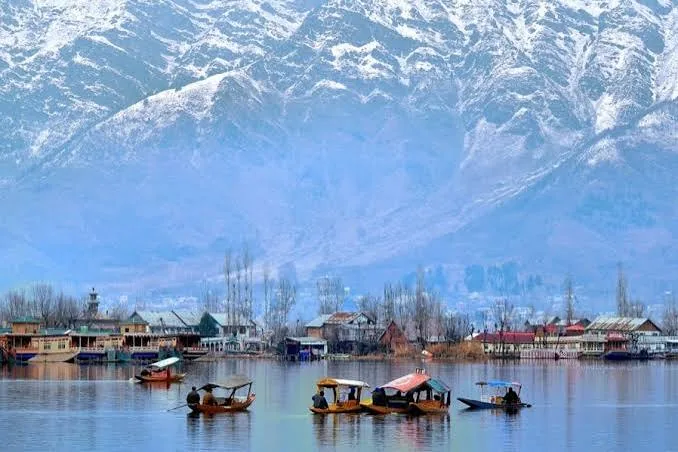
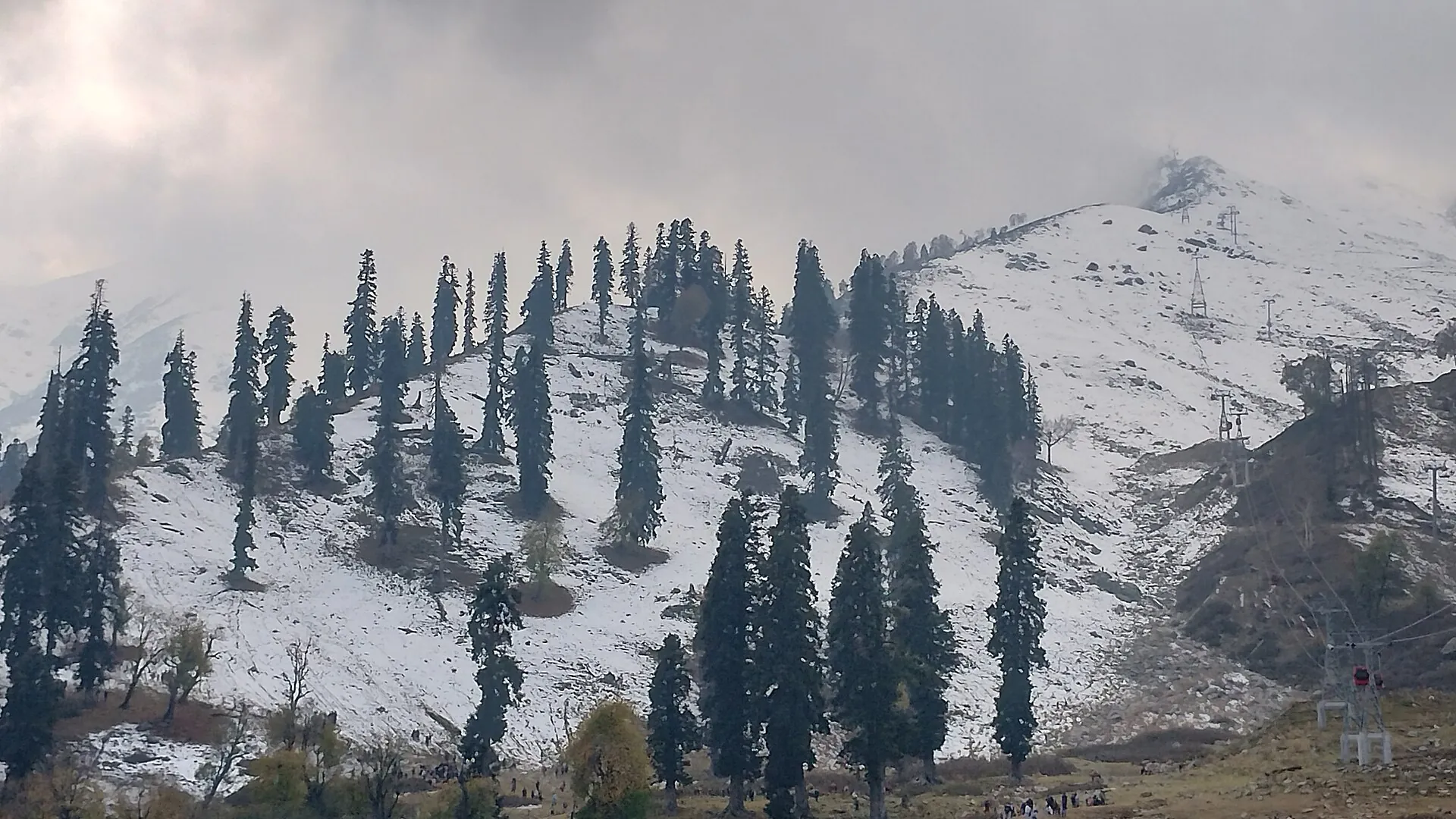
Winter turns Kashmir into a different country. Dal Lake freezes at its edges, houseboats run their bukhari stoves all day, and Gulmarg becomes a serious ski resort with some of the most talked-about lift-served powder in Asia.
January and February are the reliable snow months
December can be hit-and-miss — some years the snow arrives by the first week, some years not until January. If snow is the point of your trip, book January or February rather than gambling on December. The gondola at Gulmarg runs to Kongdoori at around 3,050 m and, weather permitting, on to Apharwat at about 3,980 m.
Winter travel needs slack in the itinerary. Heavy snowfall can close the Tangmarg–Gulmarg road for a few hours while it is cleared, and flights out of Srinagar occasionally shift. Do not book a tight onward connection for the day you come down the mountain.
What closes when
Not everything is available year-round, and this catches people out more than the weather does.
- Sonamarg and Zoji La: closed by snow roughly November to April. Genuinely seasonal.
- Gurez Valley: the Razdan Pass is open only from about late May to early October.
- Tulip Garden: roughly three weeks from late March.
- Gulmarg gondola Phase 2: weather-dependent all year, closes readily for wind.
- Srinagar, Gulmarg and Pahalgam: open year-round.
So which month should you pick?
Work backwards from what you want rather than from the calendar. Want to see snow for the first time? January. Want the valley at its greenest with children in tow? June, and book early. Want photographs without crowds? September. Want the tulips? April, and let the garden decide your dates rather than the other way round.
If you are still unsure, tell us what you are hoping for and we will tell you the month — including when the honest answer is that you should come at a different time of year than you were planning.
Questions people ask
May, June and September are the safest all-round choices, with green meadows, comfortable temperatures and every road open. April is best if you want the Tulip Garden, and January or February if you want reliable snow in Gulmarg.
January and February are the most dependable months for deep snow in Gulmarg. December can be unreliable, with some years seeing heavy snow by the first week and others not until January.
The Tulip Garden usually opens in the last week of March and stays open around three to four weeks into April. The exact dates shift each year with the winter and are announced only shortly before, so confirm before booking flights.
Yes, if you want snow and quiet. Srinagar, Gulmarg and Pahalgam stay open, Dal Lake freezes at the edges and Gulmarg becomes a genuine ski resort. Sonamarg and Gurez are closed, and itineraries need slack for snow-related road delays.