Most Kashmir budgets go wrong in the same place. The package price is clear enough; what catches people out is the set of costs that sit outside every operator’s package, everywhere in the valley, because they are controlled by local unions and government bodies rather than by tour companies. Here is the full picture, including the parts that are awkward to explain.
What a package costs
For a private trip with hotels, a dedicated vehicle and daily breakfast and dinner, our own starting prices give a fair sense of the market:
| Trip | Length | Starts from (per person) |
|---|---|---|
| Spring Bloom Special | 5D / 4N | ₹9,999 |
| Family tour | 6D / 5N | ₹10,999 |
| Classic Kashmir | 6D / 5N | ₹11,999 |
| Gulmarg winter & ski | 5D / 4N | ₹13,999 |
| Honeymoon | 7D / 6N | ₹14,999 |
| Gurez & hidden valleys | 8D / 7N | ₹17,999 |
Those are starting prices on twin-sharing, and the word starting is doing real work. The same itinerary in the third week of April or the first week of January can cost meaningfully more than the same days in November, because hotel and houseboat rates move with demand and we pass that through rather than averaging it out.
What moves the price
- Season. Peak (April, June, late December to February) versus shoulder (March, September, October) versus low (November). The gap can be thirty per cent or more.
- Hotel category. The single biggest lever. A three-star and a five-star itinerary can differ by more than the rest of the trip combined.
- Group size. Vehicle and guide costs are per trip, not per head, so four people pay noticeably less each than two.
- Houseboat category. A deluxe suite on Dal Lake costs several times a standard room.
- How much is made private. Private shikara, private photoshoot and private dinners all sit on top.
The costs that sit outside every package
This is the part worth reading twice. The following are not included by us, and are not included by any honest operator in Kashmir, because the rates are set by local unions and government bodies and change without notice.
Local union taxis
Inside Gulmarg, Pahalgam and Sonamarg, sightseeing runs on fixed-rate local union taxis rather than your own vehicle. Your car brings you to the town and waits. This is a long-standing local arrangement, it applies to everyone, and the rates are posted. If an operator tells you their package includes the sightseeing inside Pahalgam, ask them to put it in writing.
Gondola tickets
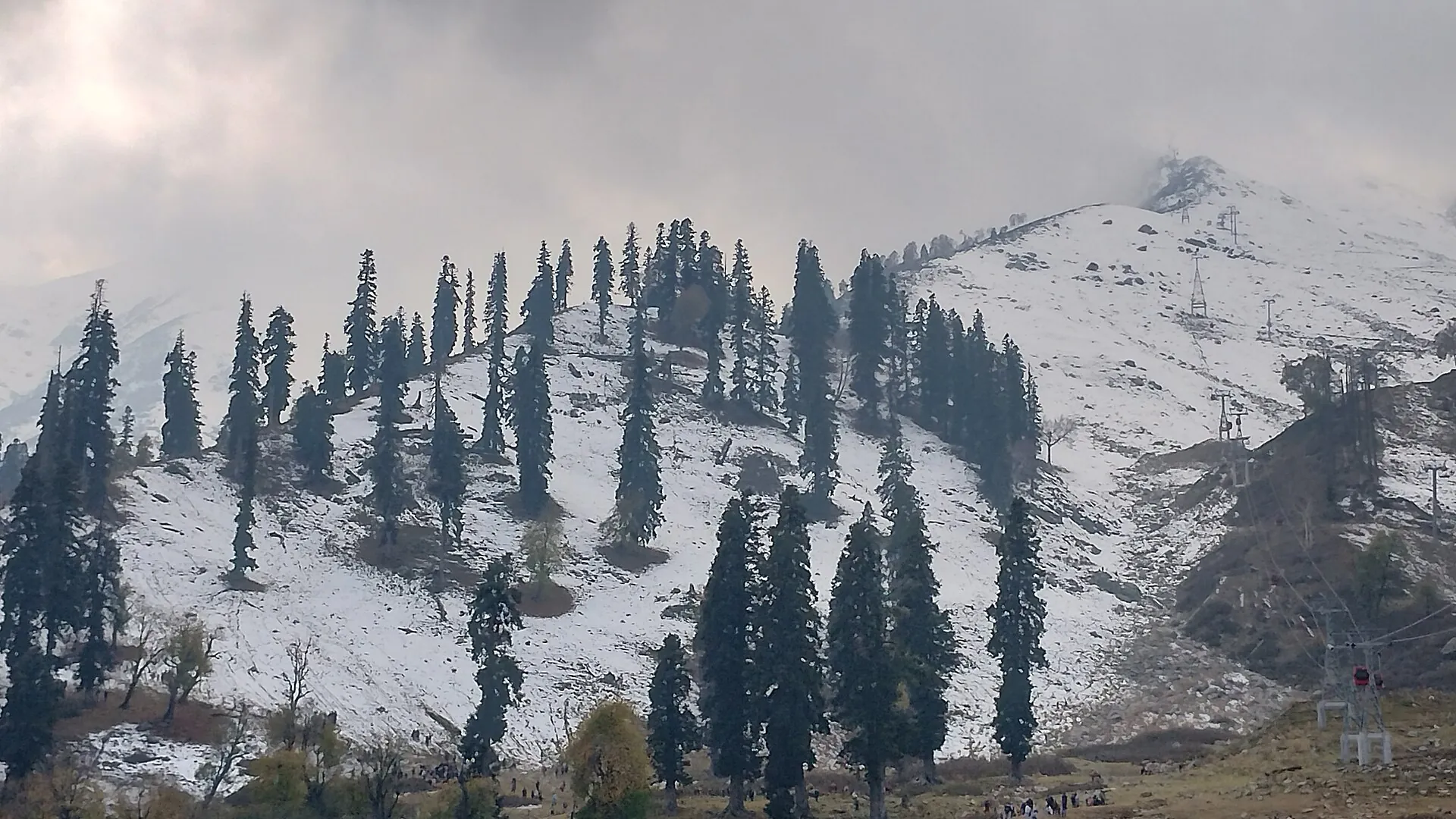
The Gulmarg gondola is run by a state corporation and tickets are sold at the counter on the day. Phase 1 to Kongdoori costs less than Phase 2 to Apharwat. Availability depends on weather and demand, which is exactly why no package can guarantee them in advance. We buy them for you at counter price with no markup.
Ponies, sledges and shikaras
Pony rides in Pahalgam and Gulmarg, sledging in the snow and additional shikara rides beyond what is in your itinerary are all run by local operators at negotiated or union rates. Agree the price and the exact destination before you set off. This is where most unplanned spending happens.
Entry fees, lunches and flights
Mughal garden and monument entry fees are modest but not included. Lunches are almost never included by anyone, because it locks you into a schedule. Flights to Srinagar are separate and are frequently the largest single line in a Kashmir budget.
A useful rule: budget roughly ten to fifteen per cent on top of your package price for the union taxis, gondola, ponies, entry fees and lunches across a six-day trip. Operators who quote suspiciously low package prices are usually the ones who have not told you about this layer.
Why the cheapest quote is usually the most expensive
Almost every Kashmir itinerary sold online has been resold. It passes through an aggregator in one city, a consolidator in another, and reaches a driver in Srinagar on whatever margin is left. Every hand takes a cut, and the parts that get squeezed are always the same: the vehicle, the houseboat category, the driver’s day.
You feel it as an older car, a houseboat further from the Boulevard than the photographs suggested, and a driver in a hurry. The saving is real but small, and it comes out of the parts of the trip you actually experience. Booking directly with a valley-based operator removes the chain.
How to get an accurate quote
Tell whoever is quoting you four things: your dates or at least the month, the number of adults and children, whether you want houseboat or hotel, and your honest budget. An operator who knows your budget can tell you what it buys in that season, which is far more useful than being sent a template.
And ask one question of any quote you receive: what is not included? The answer tells you more about the company than the price does.
A worked example: six days, two people, May
Abstract percentages are less useful than a real shape, so here is roughly how a mid-range six-day Classic Kashmir trip for two people in May breaks down. Figures are indicative per person and will move with your dates and hotel choice.
| Line | Roughly | Who sets it |
|---|---|---|
| Package (hotels, houseboat, private cab, breakfast & dinner) | ₹13,000 | Us |
| Return flights to Srinagar | ₹8,000–18,000 | Airline |
| Gondola Phase 1 + 2 | ₹1,500–2,000 | State corporation |
| Union taxis in Gulmarg & Pahalgam | ₹1,500–2,500 | Local unions |
| Ponies, sledging, extra shikara | ₹1,000–3,000 | Local operators |
| Entry fees (gardens, monuments) | ₹300–600 | Government |
| Lunches, tea, incidentals | ₹2,000–3,500 | You |
| Shopping (pashmina, saffron, crafts) | Whatever you decide | You |
Excluding flights and shopping, a realistic all-in figure for that trip lands somewhere around ₹19,000 to ₹25,000 per person. The package is roughly two-thirds of it; the local extras are the rest. Anyone quoting you a Kashmir trip without mentioning that final third is either inexperienced or hoping you will not ask.
What to budget for a family of four
This is the version we are asked for most often, and per-person figures are the wrong unit for it — families think in totals. So: two adults and two children, five nights, mid-range hotels with a night or two on a houseboat, a private vehicle throughout, breakfast and dinner included.
Our six-day family itinerary starts at ₹10,999 per person on twin-sharing in three-star hotels, and children sharing a room with parents are priced lower — ask, because it makes a real difference to the total. On top of that, budget ₹8,000 to ₹15,000 across the trip for the things children will actually want: gondola phases, ponies at Pahalgam, sledges and snow gear at Gulmarg, and the union taxis inside the resort towns.
Excluding flights, that puts a family of four somewhere around ₹56,000 to ₹63,000. Add return airfare and the origin city decides the rest: from Delhi, four returns booked six weeks out land the total near ₹72,000 to ₹90,000; from Mumbai or the southern metros, more like ₹75,000 to ₹1.25 lakh all in. The spread is almost entirely hotel category and travel month, not the itinerary.
The single biggest saving available to a family is the calendar. The May and June school break is the most expensive fortnight of the year here. The same trip in late September costs meaningfully less and, to our eyes, is the better month.
How to spend less without ruining the trip
There are good ways and bad ways to cut a Kashmir budget. These are the good ones, roughly in order of how much they save relative to what they cost you in experience.
- Change the month. The same itinerary in September or October rather than April or June can cut accommodation substantially, and September arguably has better weather than either.
- Travel as four rather than two. The vehicle is priced per trip. Two couples travelling together each pay noticeably less than either couple alone.
- Drop a hotel category, not a night. Six days in three-star beats four days in five-star for almost everyone. The valley is the point, not the lobby.
- Skip Sonamarg, keep Pahalgam. If you must lose a day, Sonamarg is the longest drive for the least time on the ground.
- One night on a houseboat, not three. The experience is front-loaded; the first night is the memorable one.
And the bad ways
Cutting the private vehicle for a shared one saves little and costs you the freedom that makes a Kashmir trip work. Booking the cheapest houseboat sight unseen is how people end up moored a long way from the Boulevard. And compressing Gulmarg, Pahalgam and Sonamarg into three days does not save money at all — it just means you see them through a car window.
If your budget genuinely will not stretch, tell us the number rather than asking for a cheaper quote. We would rather build you an honest five-day trip that works than a six-day one that disappoints.
Questions people ask
A private six-day trip with hotels, a dedicated vehicle and daily breakfast and dinner starts around ₹11,999 per person on twin-sharing in three-star hotels. Season, hotel category and group size move that substantially, and flights are separate.
Excluding flights, budget roughly ₹56,000 to ₹63,000 for two adults and two children over five nights, mid-range, with a private vehicle throughout. Adding return airfare, the total lands near ₹72,000 to ₹90,000 from Delhi and ₹75,000 to ₹1.25 lakh from Mumbai or the southern metros. Children sharing a room with parents are priced lower, and the May–June school break is the most expensive fortnight of the year.
For two people on a six-day trip, a realistic all-in budget excluding flights is around ₹19,000 to ₹25,000 per person. The package is roughly two-thirds of that and the local extras — gondola tickets, union taxis, ponies and entry fees — are the rest. Travelling in the quiet months of February, late August or September reduces it meaningfully.
Flights, lunches, gondola tickets, local union taxis inside Gulmarg, Pahalgam and Sonamarg, pony and sledge rides, and monument entry fees. These are excluded by every operator because the rates are set by local unions and government bodies.
Sightseeing inside Gulmarg, Pahalgam and Sonamarg runs on fixed-rate local union taxis rather than your own vehicle. It is a long-standing local arrangement that applies to every operator, and the rates are posted publicly.
It is mid-range by Indian standards. The controllable costs are hotels and season; the fixed costs are flights and the local extras. Travelling in September, October or November rather than April or June can cut the accommodation cost substantially.